

Return to Raja Ampat: Is the Coral Triangle Still as Spectacular?
Based on the feature “Return to Raja Ampat” by Nigel Marsh, text and photos by Nigel Marsh, published in Dive Log Australasia #420, October 2026, pages 88–93 (www.divelog.net.au).
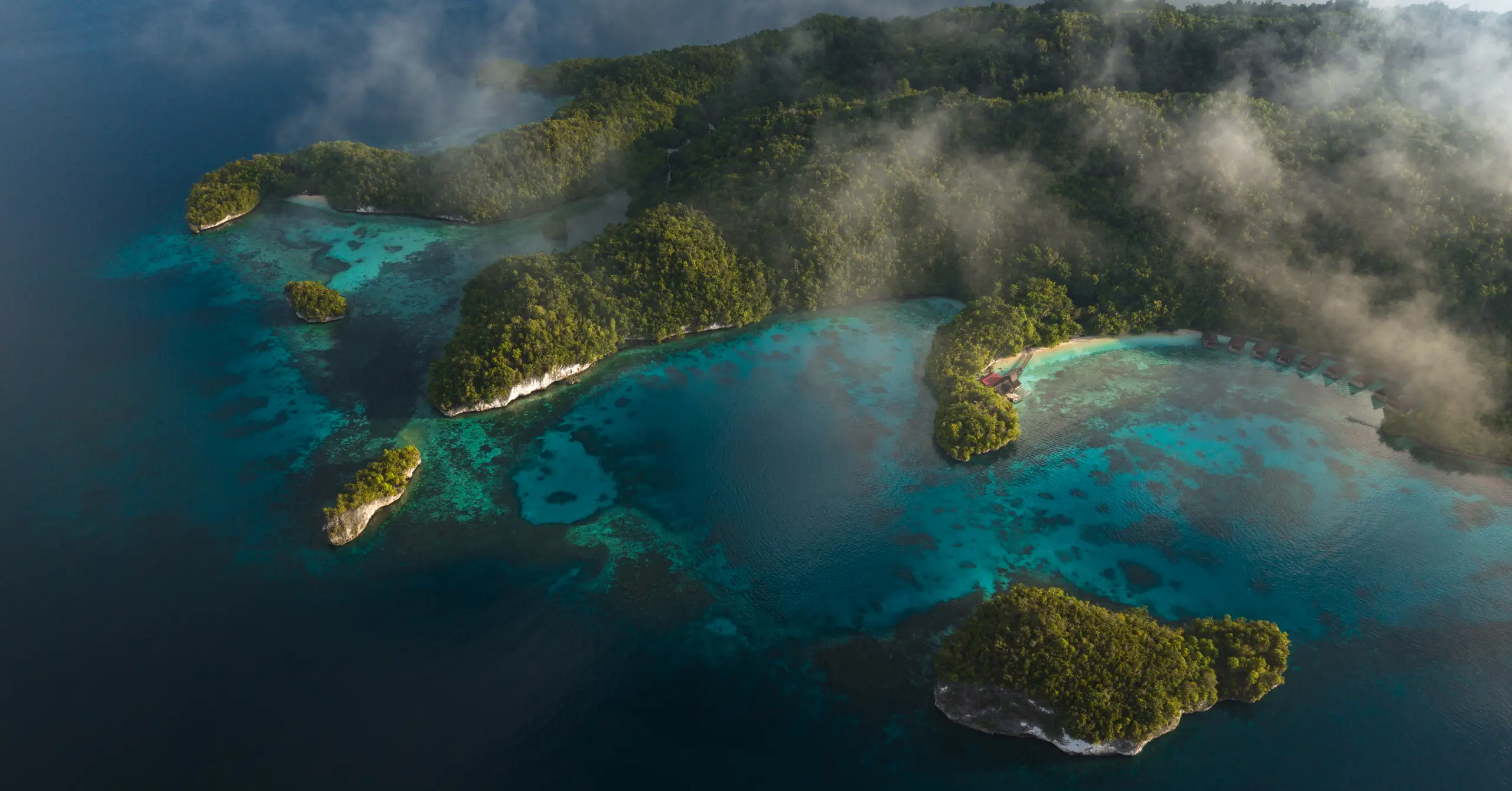
Raja Ampat sits at the top of almost every diver’s wish list, and for good reason. Underwater photographer Nigel Marsh first visited in 2017 and was won over immediately. Since then, resorts and liveaboards have multiplied and far more divers now visit this remote corner of Indonesia. So after seven years away, he went back to answer one big question: has all that attention taken a toll on the reefs?
Why Raja Ampat is so special
Raja Ampat lies in West Papua, right in the heart of the Coral Triangle, widely regarded as the richest and most diverse marine ecosystem on the planet. The region is home to more than 1,600 species of fish and around 550 species of coral, and it became a protected marine park in 2004.
Divers began exploring the area in the early 2000s, and today dozens of dive resorts and liveaboards bring thousands of divers and snorkelers to its reefs every year.
A trip with mixed hopes
Nigel’s first two visits, in 2017 and 2018, were aboard a Sea Safari Cruises liveaboard. He came away stunned by the beauty of the reefs, the sheer numbers of fish, and the healthy corals. Even the jetties at the villages of Sawandarek and Arborek, which would be littered with rubbish in many other parts of Indonesia, were covered in hard corals and busy with fish.
He hoped that would last, but he had his worries. A fast-growing local population, rising dive tourism, and heavy fishing in protected areas during the covid period all seemed like threats.
The chance to check came unexpectedly, through an invitation from Indonesia’s Ministry of Tourism, which runs annual trips for travel agents and media. Nigel joined three Australian dive travel agents as the media representative, with a stay at Katembe Private Island Resort promising a fresh perspective.
The journey in
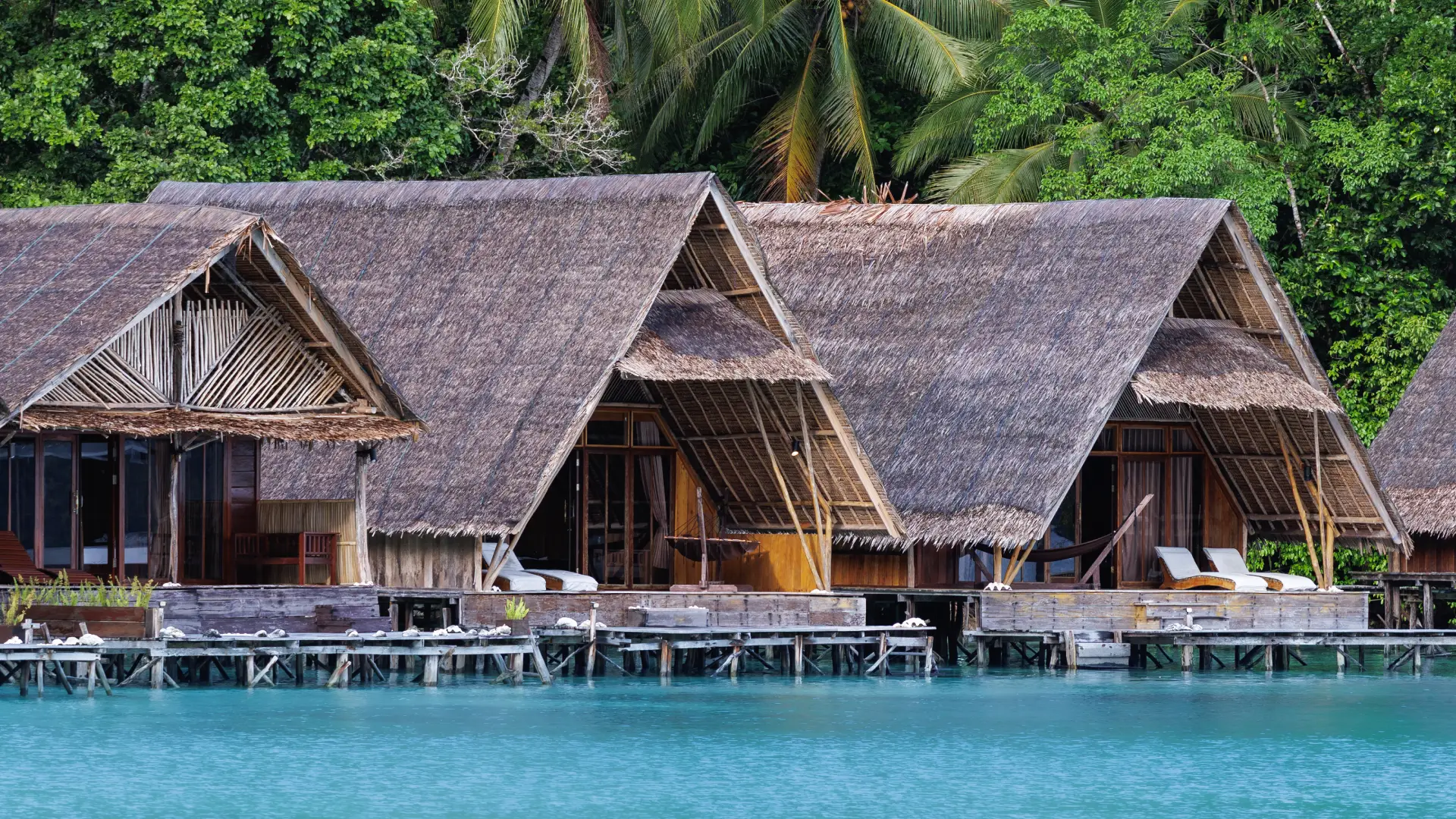
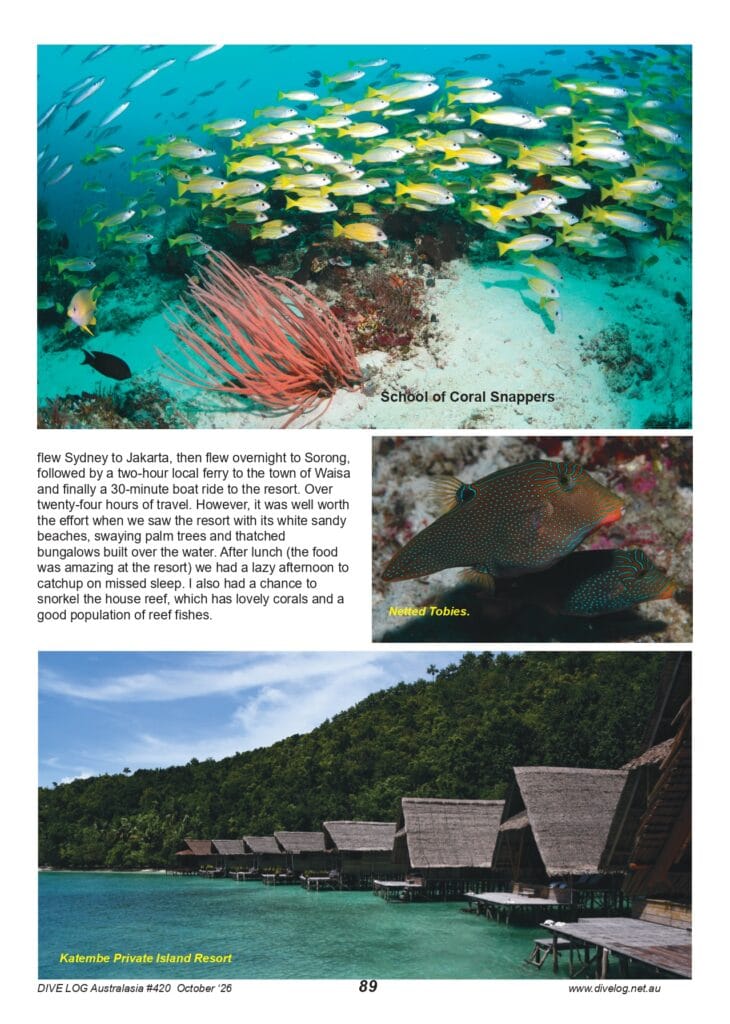
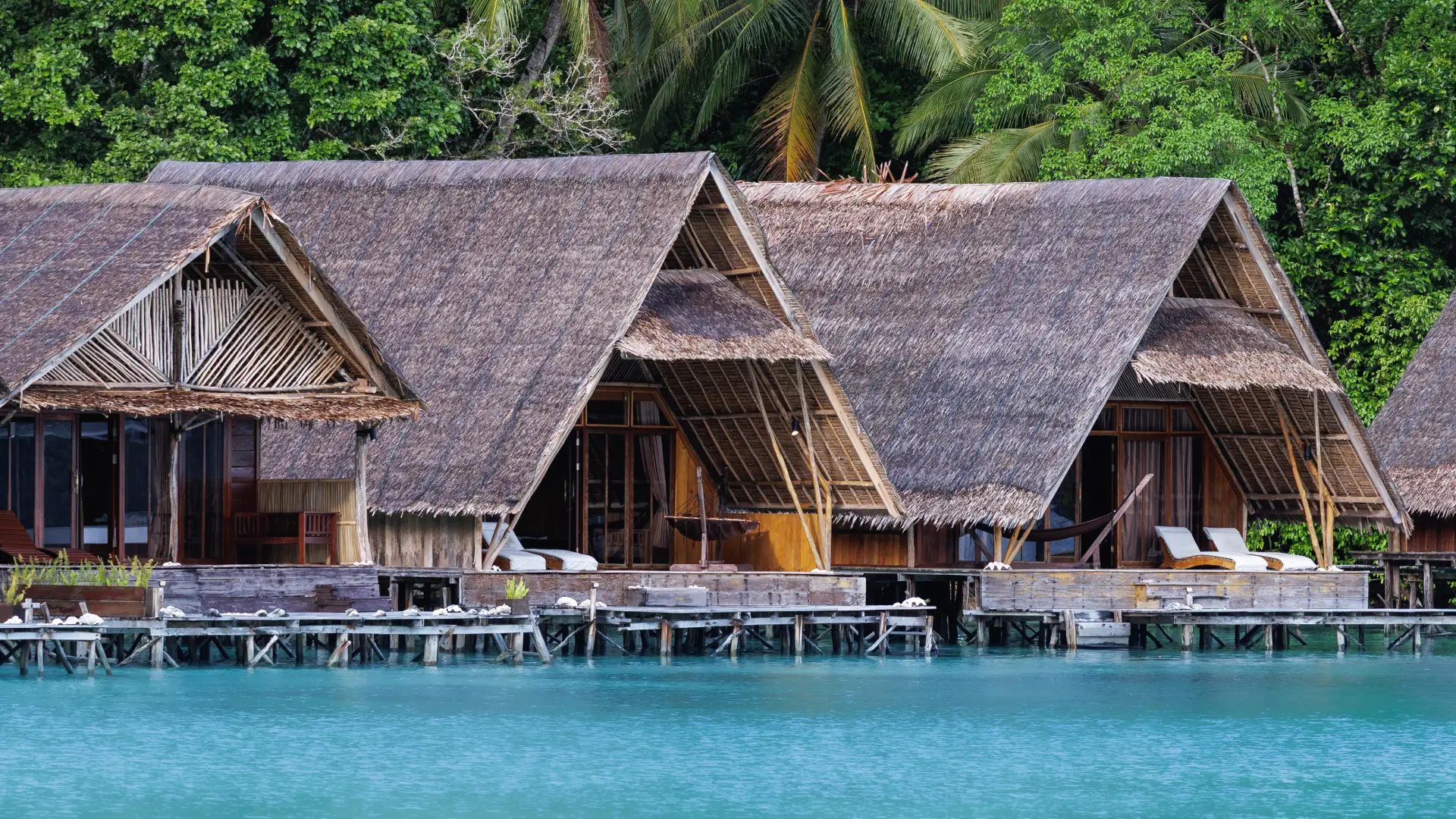
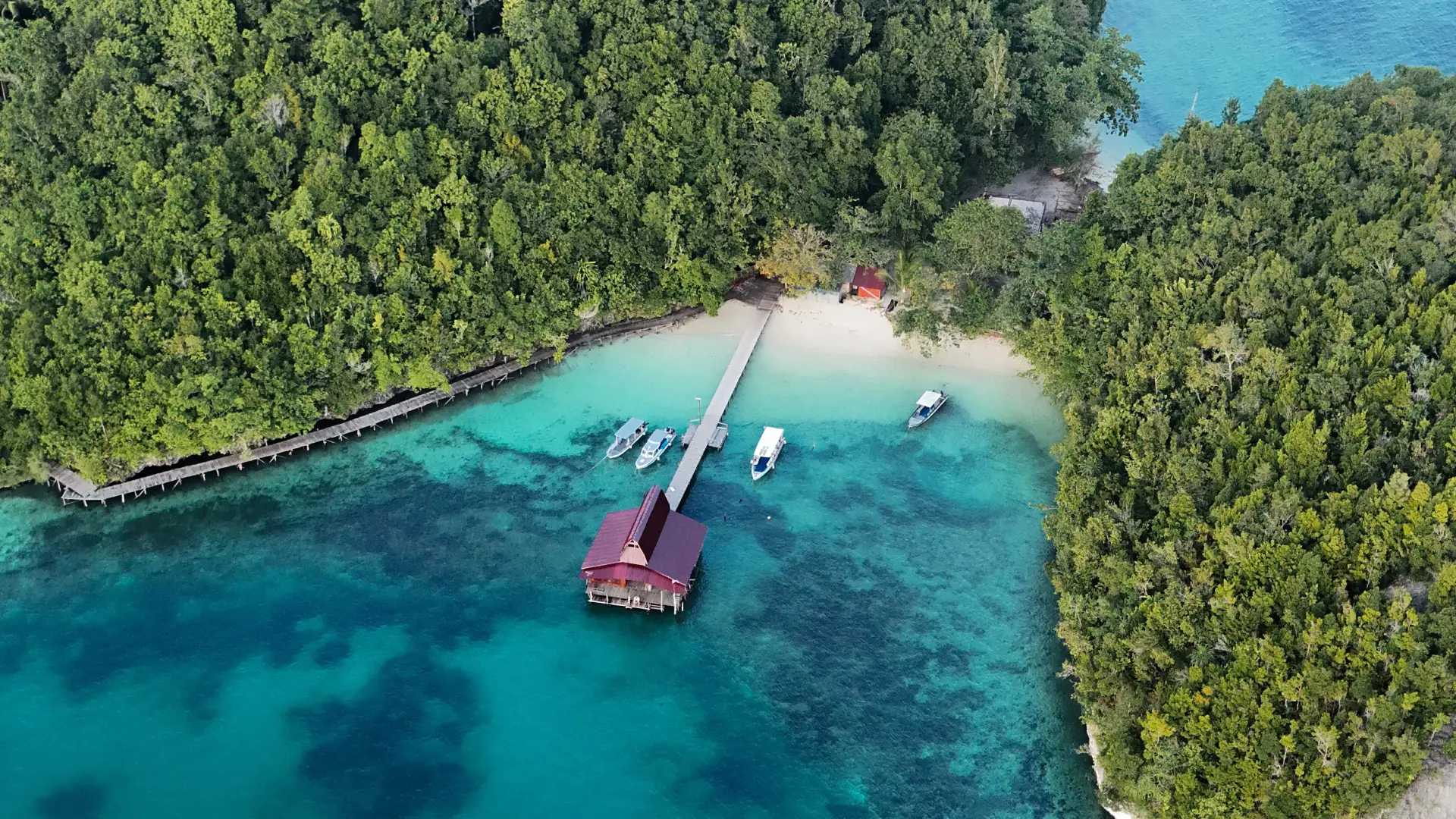
Reaching Raja Ampat is still a proper adventure. The group flew from Sydney to Jakarta, took an overnight flight to Sorong, then a two-hour ferry to Waisa, and finally a 30-minute boat to the resort. That’s more than 24 hours of travel, but the payoff was immediate: white sand beaches, swaying palms and thatched bungalows built over the water. After a long lunch (the resort’s food was a highlight) and a much-needed nap, Nigel snorkelled the house reef and found lovely corals and plenty of reef fish.
The diving
Mioskon. The first dive set the tone. The corals and fish looked healthy, there was no rubbish on the reef, and Nigel was thrilled to see a trio of Moluccan bluespotted maskrays, something he hadn’t spotted on earlier trips. A drift along the wall brought swirling coral snappers, crocodilefish, anemonefish and a resting tasselled wobbegong, one of Raja Ampat’s signature residents.
Friwen Wall. Another familiar site, and another success. A blacktip reef shark cruised the shallows (reef sharks were rare on his earlier trips), and the tree-draped wall was packed with sponges, gorgonians and sea whips, along with a rarely seen comet fish and plenty of invertebrates.
Batu Lima. A new site for Nigel. Visibility dropped to about 10 metres, compared with the 15 to 30 metres elsewhere, but the sloping reef was crowded with life. With a macro lens and the help of guide Cliff, he photographed a shortpouch pygmy pipehorse, nudibranchs, dottybacks, blennies and tobies.
Blue Magic. One of Raja Ampat’s most famous sites, this bommie rises from 35 metres to 10 metres and attracts schools of pelagic fish, reef sharks and oceanic manta rays. Popular spots need booking, so the resort secured a 7am slot. A current was sweeping across the bommie, and the dive delivered barracuda, trevally, snappers, fusiliers, batfish, whitetip and blacktip reef sharks and a wobbegong. The manta, though, didn’t show.
Sawandarek: the one worry
Nigel counts Sawandarek among Raja Ampat’s best sites, so the approach was sobering: large amounts of rubbish floating on the surface. He notes it’s a growing problem across Indonesia that has worsened during his twenty years of visits. The crew couldn’t say whether it was local or washed in from elsewhere.
The village itself has changed. Where there was once a single jetty and no other divers, there are now two jetties, picnic areas, a dive shop, homestays and six other boats at the site.
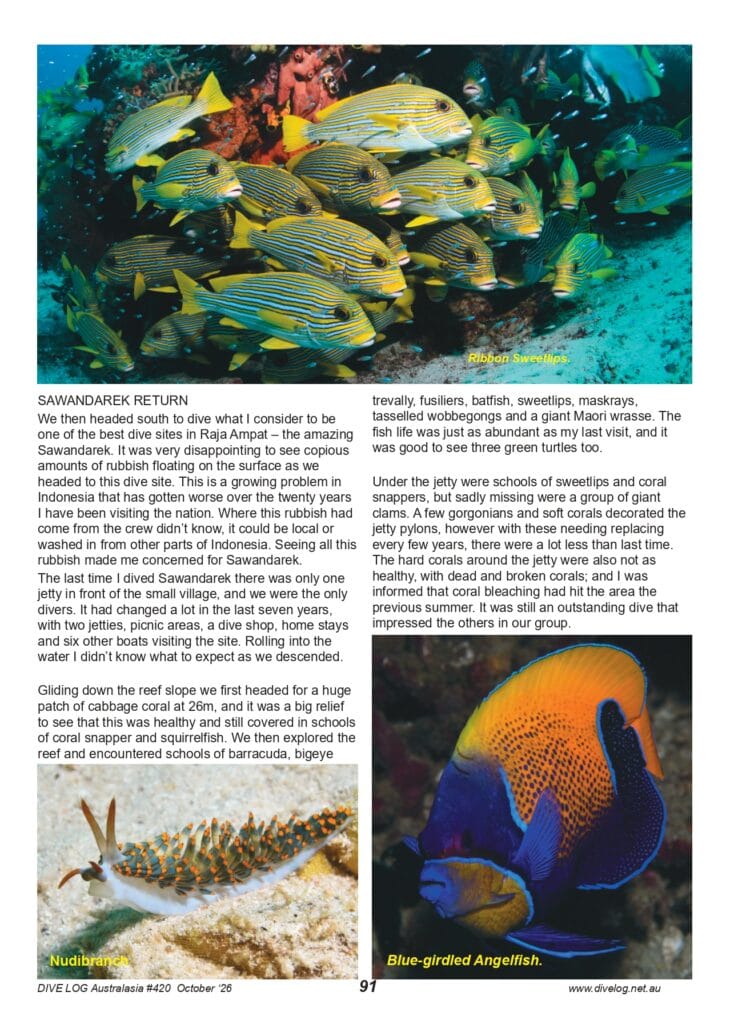
Underwater, the news was mostly good. A large patch of cabbage coral at 26 metres was healthy and thick with coral snappers and squirrelfish, and the dive offered barracuda, bigeye trevally, batfish, sweetlips, maskrays, wobbegongs, a giant Maori wrasse and three green turtles. Under the jetty, however, there were fewer gorgonians and soft corals than before, the giant clams were gone, and the hard corals showed dead and broken patches. Nigel was told coral bleaching had hit the area the previous summer. Even so, it remained an outstanding dive that impressed everyone in the group.
New sites and old favourites
Over the next three days the group tried several spots new to Nigel:
- Sapokren: a muck dive with seahorses, marble snake eels, sand divers, waspfish and nudibranchs.
- East Friwen and Batu Rufus: lovely corals, plenty of fish and a few reef sharks.
- At the resort: dozens of small blacktip reef sharks patrolling the shallows, even passing beneath the bungalows.
At Arborek, the sloping reef and jetty were better than on his last visit, with more fish, wobbegongs, ribbon sweetlips and reef sharks. Melissa’s Garden was just as he remembered, with hard coral gardens and masses of reef fish. Manta Sandy was the one letdown, with no reef mantas on the day, and a viewing setup that keeps divers kneeling about 8 metres from the cleaning bommies.
A manta finale
On the final day, the group returned to Blue Magic for an early dive under heavy grey skies. For forty minutes, schools of pelagic fish kept everyone entertained. Then a huge oceanic manta ray, about 4.5 metres across, glided out of the blue. For the next twenty minutes it circled the divers, even swimming straight toward them while being cleaned. It was, in Nigel’s words, a magic end to the trip.
The verdict
Seven years on, Raja Ampat delivered. The corals were largely healthy, fish life was abundant, and Nigel saw more reef sharks and stingrays than before. The concerns are real, namely floating rubbish and bleaching damage at busy Sawandarek, but the overall picture is encouraging. And Nigel says he won’t be waiting another seven years to return.
About the author
Nigel Marsh leads photography-focused group dive trips to destinations around the world each year, offering help with underwater photography and regular talks on marine life. Find out more at www.nigelmarshphotography.com.
Source: Nigel Marsh, “Return to Raja Ampat,” Dive Log Australasia #420, October 2026, pp. 88–93. Text and photos by Nigel Marsh. www.divelog.net.au
Related Articles
Private Island Resort in Raja Ampat | Katembe
Sunrise & Sunset at Katembe Private Island Resort | Raja Ampat
Raja Ampat Diving: Is the Coral Triangle Still Spectacular?
How to Get to Katembe Private Island Resort | Raja Ampat Travel Guide